

Even though the value of so-called human capital is difficult to quantify, employees are undoubtedly among the most important factors in a company's value creation. The methods of Human Resource Management (HRM), which became popular in Germany in the 1990s, serve to identify and utilize the potential of a company's own human capital.
How employers and employees benefit from HRM
The term Human Resource Management originated in America in the 1980s. In Germany, it is also referred to as Personnel Management. One of the main goals of human resources management is to ensure employee satisfaction and thereby increase their productivity.
Satisfied employees are demonstrably more motivated and therefore ultimately more productive. However, this state is not so easy to create. The German top manager Hans Christoph von Rohr summed up the problem perfectly: " Capital can be raised, factories can be built, but people have to be won over."

Human Resource Management (HRM) is therefore about more than just personnel administration. Its main tasks include leadership, planning, development, and communication. The goal is to channel the potential of each individual employee in such a way that they contribute to the company's performance and, consequently, its success.
The Harvard Model and the Michigan Approach
The Harvard approach and the Michigan approach, developed in the 1980s, are considered the basis of modern human resource management concepts.
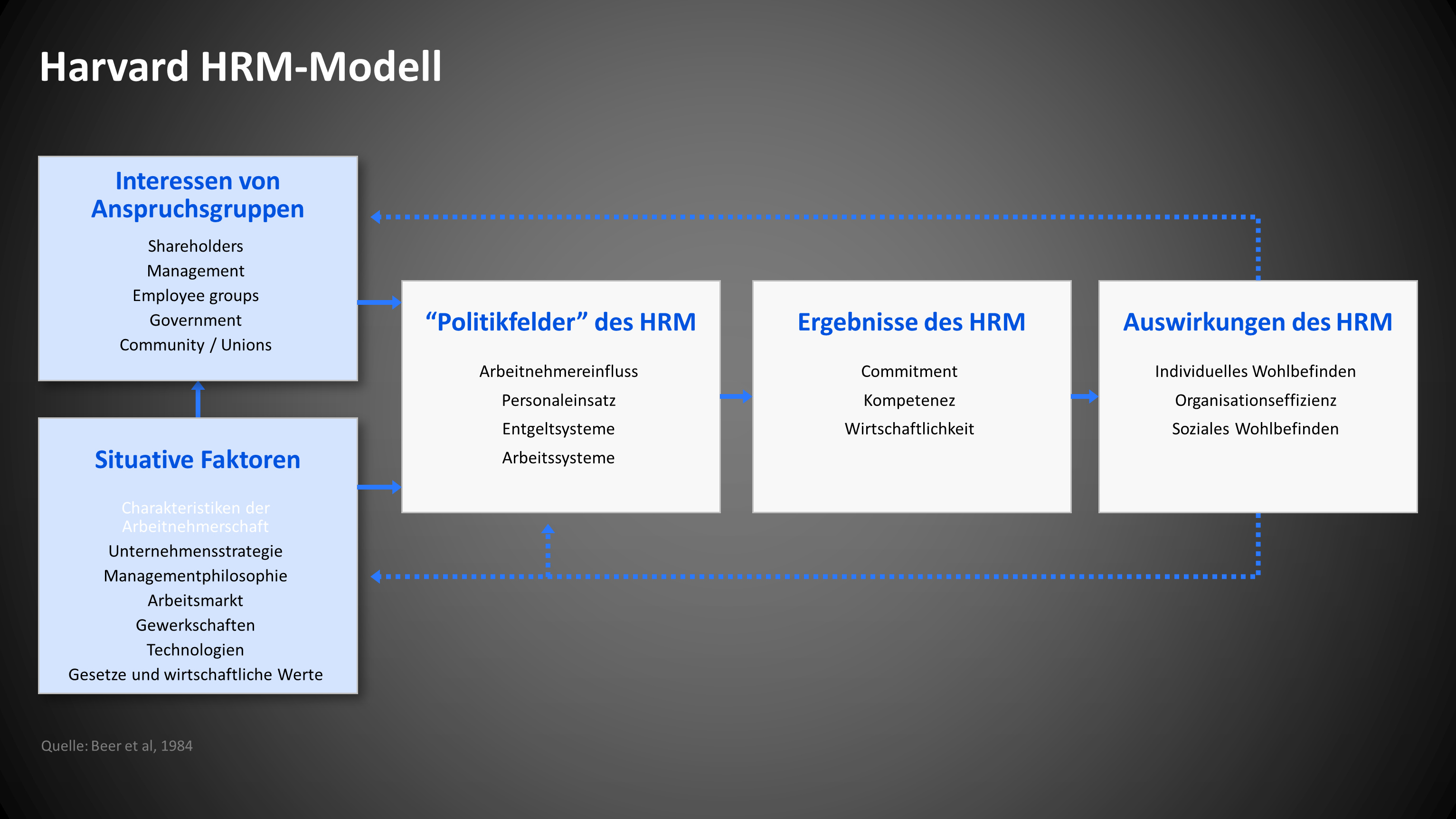
The Harvard approach, developed around 20 years ago by Professors Roger Fisher and William Ury, examines internal and external factors that influence human resource management. These include company philosophy, employee characteristics, the influence of unions, demographic trends, the labor market, technological advancements, and general economic developments. With regard to human resource management, four areas of action are distinguished:
- The company's employee flow (hiring, transferring, promoting, developing and dismissing staff)
- Incentives and rewards through the pay and participation system
- The work organization
- The direct influence of employees
The individual areas of activity should be coordinated both with each other and with regard to the company strategy. Employees are viewed as "social capital," which is why the personal development of each individual employee is a priority.
The Michigan approach was developed in the early 1980s by a research group at the University of Michigan and, compared to the Harvard approach, places greater emphasis on the internal consistency of personnel policy measures.
A key element is the "human resource cycle" with its four functional areas of personnel policy: recruitment, compensation, administration, and performance appraisal. Human resource management should seamlessly integrate into the corporate strategy and contribute to its implementation.
Modern approaches in human resources
Both the Harvard and Michigan approaches continue to serve as foundations for modern HR management concepts. These include, for example, the AHRI Model of HR Excellence, the Warwick Model, McLagan's Wheel of Human Resources, and the model by HR guru Dave Ulrich.
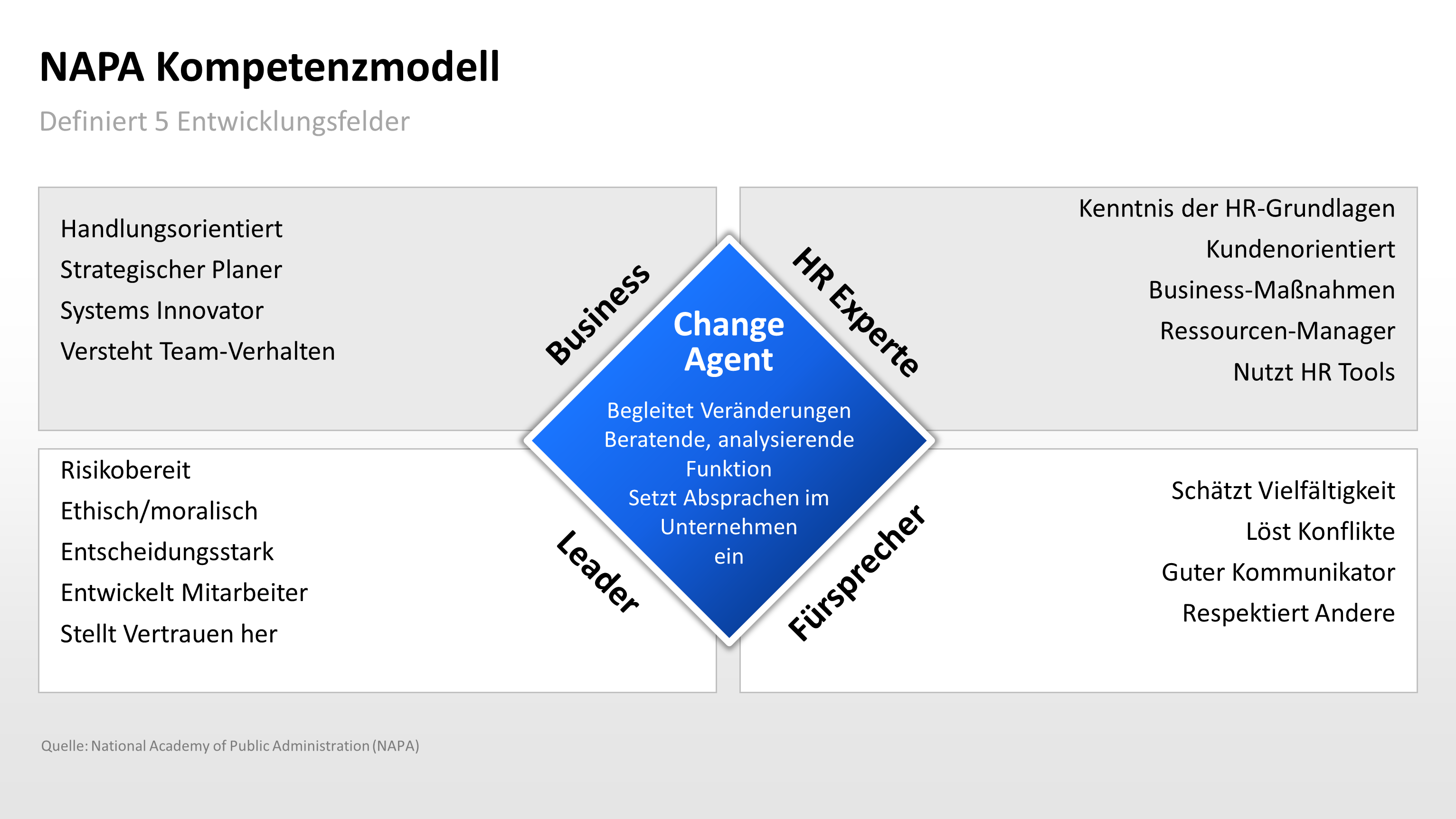
These and other human resources management models are available in our online shop as a comprehensive set of 84 PowerPoint slides. You can use them as a practical toolbox providing an overview of common HR concepts, or as a template for presenting your human resources strategy with PowerPoint.